Enhance the nutritional and health value of everyday foods
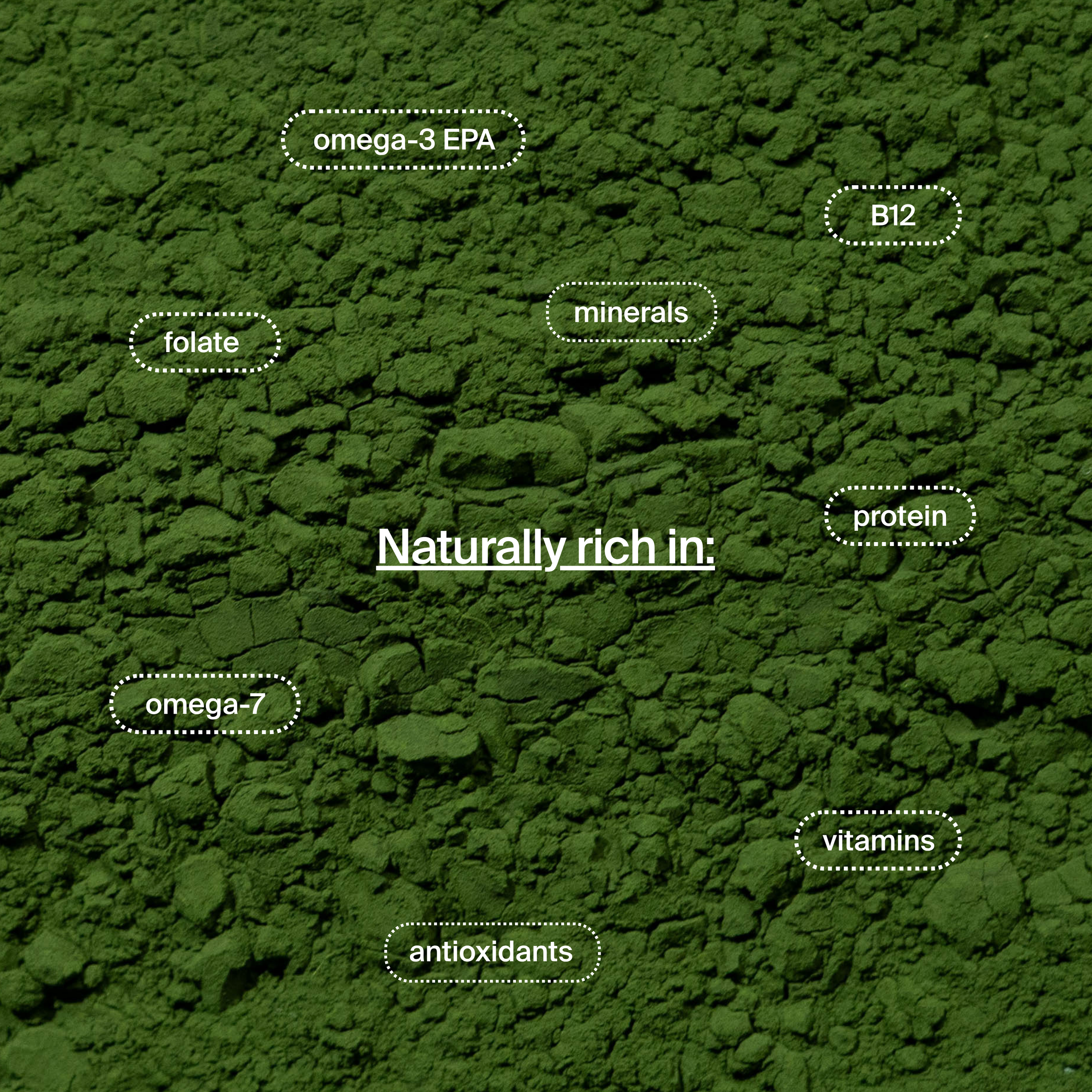
Easily incorporated into a wide range of products, Nannovia™ is exceptionally rich in Omega-3 & 7 fatty acids, anti-inflammatories, antioxidants, protein, essential vitamins and minerals.





One ingredient. Multiple benefits.
According to the National Health and Nutrition Examination Survey (NHANES), over 90% of Americans are not meeting recommendations for omega-3 intake. Similar data shows over 80% of people in EU, UK & Australia* are not consuming recommended intakes.
Studies over the past 50 years show that people with lower Omega-3 levels have higher likelihood of diseases like heart disease, diabetes, and cancer and generally have shorter lifespans.
Professor Lindsay Brown of Griffith University emphasizes the importance of Omega-3, particularly EPA, which has been shown to reduce cardiovascular events by 25% in those with cardiovascular disease.

Biological benefits
-
Nannovia™ has strong anti-inflammatory capacity*.
Several bioactive compounds in NQ-1 have been shown to have anti-inflammatory action, inhibiting pro-inflammatory compound production, reducing inflammatory gene expression and targeting major inflammatory pathways. -
Nannovia™ contains powerful antioxidant violaxanthin*, shown to be even more powerful than lutein.
The combination of many antioxidant vitamins, minerals, carotenoids and polyphenols provides Nannovia™ with the ability to scavenge free radicals and protect against oxidative stress. Antioxidants include vitamin C and E, beta carotene, lutein, zeaxanthin and violaxanthin. -
Beta-glucan and fibres support gut and microbiome health, promoting the growth of beneficial bacteria as a prebiotic.
Research indicates support for livestock and companion animals, as well as humans. -
Emerging evidence indicates potential health benefits for blood sugar modulation*.
Research shows the antioxidant and anti-inflammatory properties and range of macronutrients, support in improving insulin sensitivity and blood sugar balance. -
β-carotene, zeaxanthin and lutein may provide photo and UV protection*.
The antioxidant and anti-inflammatory action may help skin-cell recovery from damage due to harmful UV. Interestingly, microalgae produce powerful carotenoids to protect the cells from the harmful effects of UV.
-
Promoting healthier aging of the skin, brain, eye* and musculoskeletal systems.
Supporting better flexibility, cognition, brain function and memory. Reducing visible signs of aging** such as dry skin and wrinkles via polyunsaturated fatty acids omega-3 EPA, γ-linolenic and linoleic acid and Omega 7, antioxidants, anti-inflammatories and essential amino acids.
*https://www.mdpi.com/2072-6643/14/4/827
**https://www.ncbi.nlm.nih.gov/pmc/articles/PMC8704537/

Functional benefits
-
Omega 3* consumption improves cognition, learning, memory and blood flow to the brain.
Omega 3 also preserves nerve cells and protects against neurodegeneration.B-vitamins, especially B12, are critical for proper and healthy function of the nervous system, moreso during times of stress. Lutein** has also been shown to support brain health.
*https://www.ncbi.nlm.nih.gov/pmc/articles/PMC9641984/
**https://www.nutrafoods.eu/index.php/nutra/article/view/105 -
Researchers and global health authorities are clear that good Omega-3 intake, especially EPA, is clearly linked to better cardiovascular health.
A Lancet systematic review* confirmed EPA monotherapy provides promising results. EPA alters platelet function, inflammation, cholesterol distribution and endothelial dysfunction**.
Additional benefit is provided via minerals and vitamins, such as magnesium, carotenoids and soluble fibre. Nanno oceanica*** has been shown to be effective in maintaining healthy cholesterol levels.*https://www.thelancet.com/journals/eclinm/article/PIIS2589-5370(21)00277-7/fulltext
**https://www.ncbi.nlm.nih.gov/pmc/articles/PMC9834373/
***https://pubmed.ncbi.nlm.nih.gov/32585854/ -
Beta-glucan and other soluble fibre, along with non-soluble fibre provide prebiotic health benefit, promoting healthy growth of good bacteria and improve gut and microbiome health.
In addition the antioxidant and anti-inflammatory benefits, along with essential amino acids and protein, ensure good structure and functional support. N.oceania improves digestibility*, supporting better digestion of plant and other proteins**.
*https://www.sciencedirect.com/science/article/pii/S0268005X23007580
**https://www.sciencedirect.com/science/article/abs/pii/S0268005X23007580 -
B vitamins, selenium, amino acids and polyunsaturated fatty acids, including omega-3 EPA, γ-linolenic and linoleic acid, and Omega 7 nourish, moisturise and promote healthy growth of skin, nails and hair.
Skin health is further enhanced by antioxidants mopping up harmful free radicals and supporting repair. Anti-inflammatories help to calm inflamed skin and support the reduction of redness and swelling. Omega 7 helps rejuvenate skin cells. -
Balancing blood sugar levels is critical for good weight management and metabolic health.
Research* indicates N.oceanica provides support for the improvement of disrupted metabolic health, assisting in better (general) health outcomes. This is due to the holistic nutritional profile of omega 3 EPA, proteins, fibre, vitamins and minerals, along with antioxidant carotenoids.
*https://pubmed.ncbi.nlm.nih.gov/34836248/ -
Carotenoids, found in high concentration in the macular* and other eye structures, are important for eye health. Higher dietary intake of lutein, along with a range of vitamins, minerals and omega 3, is associated with improved macular health.
Lutein is also used to reduce the harmful impact of blue light** and digital screens and to protect the eyes from harmful UV. Omega 3 is also used to reduce eye dryness***.
*https://academic.oup.com/nutritionreviews/article/81/6/670/6696221?login=false
**https://www.mdpi.com/2072-6643/12/6/1721
***https://onlinelibrary.wiley.com/doi/full/10.1111/aos.15255